数学家传记
道格拉斯·哈特里是一位英国数学家和物理学家,从事数值分析工作。
道格拉斯·哈特里的父母是伊娃·雷纳,她在公共生活中发挥了重要作用,担任全国妇女委员会主席和剑桥市长,以及William Hartree,他在剑桥大学工程实验室任教。伊娃和威廉有三个儿子;杰西·道格拉斯是长子,他的两个弟弟都在成年之前去世。
道格拉斯的学校教育在剑桥和彼得斯菲尔德。正是在贝达莱斯学校,他第一次对数学产生兴趣,这是由于该校数学教学出色。他于1915年进入剑桥圣弗瑞兹·约翰学院,但第一次世界大战打断了他的学业,他加入了一个研究防空炮术的团队。
战后他回到剑桥,并于1921年毕业,但也许由于学业中断,他只获得了自然科学二等学位。然而,他继续在1926年获得博士学位,并在担任圣约翰学院(1924-27年)和基督学院(1928-29年)的会士后,被任命为曼彻斯特大学应用数学教授。在剑桥学习期间,他于1923年与凯西克的伊莱恩·查尔顿结婚。他们有一个女儿和两个儿子。
哈特里从1929年到1937年担任曼彻斯特的讲席,然后转到理论物理讲席。在第二次世界大战期间与供应部合作后,他于1946年被任命为剑桥大学普卢默数学物理教授。他一直担任这个职位直到去世。
哈特里基本上是一位理论物理学家,他在数值分析方面发展了强有力的方法。他对数值方法的兴趣最初源于1916-18年间他在防空炮术方面的工作。然而,尼尔斯·玻尔于1921年在剑桥开设了一门讲座课程,哈特里深受影响,致力于将数值方法应用于积分微分方程以计算原子波函数。
哈特里得知美国正在研制一台由Vannevar Bush开发的微分分析仪。这台机器最初由开尔文勋爵(开尔文)提出,通过一个在旋转圆盘上滚动的轮子来进行积分。哈特里访问了波士顿以了解微分分析仪的工作原理,然后回到曼彻斯特建造了自己的机器。
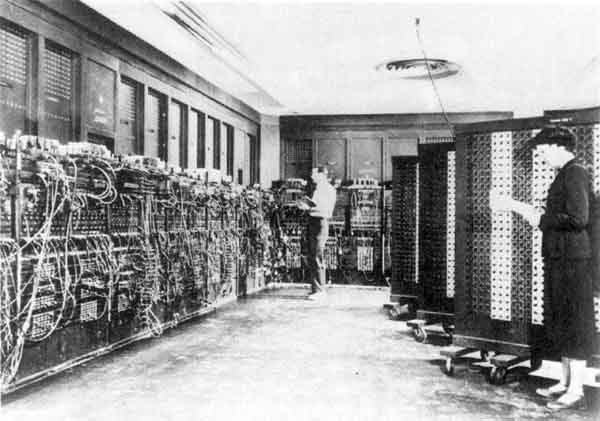
微分分析仪很快被电子计算机取代,当约翰·皮斯普·埃克特建立ENIAC时,哈特里被要求前往美国就其使用提供建议。他展示了如何使用ENIAC计算抛射体的轨迹。在1946年他被任命为剑桥讲席的就职演讲中,他说:-
高速数字计算机对文明的影响很可能与核动力的出现一样大。
除了将数值方法应用于弹道学之外,哈特里还将其应用于大气物理学和流体动力学。他写了许多重要著作,包括1952年的Numerical analysis,该书成为该领域的经典。在这本书中他写道:-
任何打算进行严肃计算的人都应该认识到,对错误进行充分检查是任何令人满意的数值过程中必不可少的部分。没有人,也没有机器,是绝对可靠的,可以说,理想的目标不是完全避免错误,而是找出所犯的所有错误,从而使工作摆脱任何未被识别的错误。
哈特里的优势之一在于他研究知识的广度。他也是一位杰出的讲师,能够凭直觉判断听众的水平,并出色地调整自己的讲解以达到最大效果。他在数学之外有许多兴趣,尤其是音乐,既弹钢琴又指挥一个业余乐团。另一个他从少年时代就有的兴趣是铁路,特别是信号问题。晚年,他将自己的数学技能很好地用于这一爱好,为铁路公司提供交通问题方面的建议。
在2中,他被描述如下:-
他是最善良的人,在自己与他人之间不设置也不承认任何障碍;尤其是年龄差异,对他而言毫无意义,年龄只有他几分之一的人在他面前也感到自在。
Douglas Hartree's parents were Eva Rayner, who played a major role in public life being president of the National Council of Women and mayor of Cambridge, and William Hartree who taught in the engineering laboratory a the University of Cambridge. Eva and William had three sons; Douglas was the oldest and both of his two younger brothers died before reaching adulthood.
Douglas's school education was in Cambridge and Petersfield. It was at Bedales school that he first became interested in mathematics and this was due to the excellent teaching of the subject at that school. He entered St John's College Cambridge in 1915 but World War I interrupted his studies and he joined a team studying anti-aircraft gunnery.
He returned to Cambridge after the war and graduated in 1921 but, perhaps because of his interrupted studies, he only obtained a Second Class degree in Natural Sciences. However he went on to obtain a doctorate in 1926 and, after being a Fellow of St John's College (1924-27) and Christ's College (1928-29), he was appointed professor of applied mathematics at the University of Manchester. During his studies at Cambridge he married Elaine Charlton of Keswick in 1923. They had one daughter and two sons.
Hartree held the chair at Manchester from 1929 to 1937 when he moved to the chair of theoretical physics. After undertaking work with the Ministry of Supply during World War II, he was appointed Plummer Professor of Mathematical Physics at Cambridge in 1946. He held this post until his death.
Hartree was basically a theoretical physicist, and he developed powerful methods in numerical analysis. His initial interest in numerical methods arose from his work on anti-aircraft gunnery in 1916-18. However Niels Bohr gave a lecture course in Cambridge in 1921 and Hartree was much influenced, working on applications of numerical methods for integrating differential equations to calculate atomic wave functions.
Hartree learnt of a differential analyzer being developed by Vannevar Bush in the USA. This machine, first proposed by Lord Kelvin (William Thomson), performs integration with a wheel rolling on a rotating disk. Hartree visited Boston to learn about the workings of the differential analyzer, then returned to Manchester and built his own.
The differential analyzer was soon to be replaced by electronic computers and when John Eckert set up ENIAC, Hartree was asked to go to the USA to advise on its use. He showed how to use ENIAC to calculate trajectories of projectiles. In his inaugural address on his appointment to the chair in Cambridge in 1946 he said:-
It may well be that the high-speed digital computer will have as great an influence on civilization as the advent of nuclear power.
In addition to applying numerical methods to ballistics, Hartree applied them to the physics of the atmosphere and to hydrodynamics. He wrote a number of important books including Numerical analysis in 1952 which became a classic of the subject. In this book he writes:-
Anyone intending to undertake a serious piece of calculation should realise that adequate checking against mistakes is an essential part of any satisfactory numerical process. No one, and no machine, is infallible, and it may fairly be said that the ideal to aim at is not to avoid mistakes entirely, but to find all mistakes that are made, and so free the work from any unidentified mistakes.
One of Hartree's strengths was in the breadth of his research knowledge. He was also an outstanding lecturer, able to sum up the level of his audience with his intuition, and brilliantly pitch his explanations for maximum effect. He had many interests outside mathematics, especially music with both his piano playing and conducting an amateur orchestra. Another interest, which he had from boyhood, was railways, particularly in the problems of signalling. He put his mathematical skills to good use in this hobby later in his life when he advised railway companies on their traffic problems.
He is described in [2] as follows:-
The kindest of men, he set up or recognised no barriers between himself and others; differences in age, in particular, meant nothing to him and men a fraction of his age felt at ease in his presence.
正文里的方括号编号指向这里,悬停即可直接看到条目。书目保留原文——译了书名反而查不到文献。
原站列出的延伸阅读与外部数据库,照原样保留,目标多为英文页面。
关于道格拉斯·哈特里的其它页面:
原站的交叉引用。指向本站已镜像专题的留在站内,其余仍指回原站。